Outbound processing involves packing products into appropriate containers, such as boxes, crates, or pallets, and securing them for transportation. The goal of packing for outbound processing is to ensure that goods are protected during transit and arrive at their destination in good condition. This may involve selecting appropriate packing materials, such as bubble wrap, foam inserts, or packing peanuts, and using them to cushion and protect products from damage.
Efficient and effective packing for outbound processing is essential for businesses that rely on shipping and delivery to get their products to customers. It helps reduce shipping costs, minimize damage to products during transit, and improve overall customer satisfaction.
The Packing & Loading Application
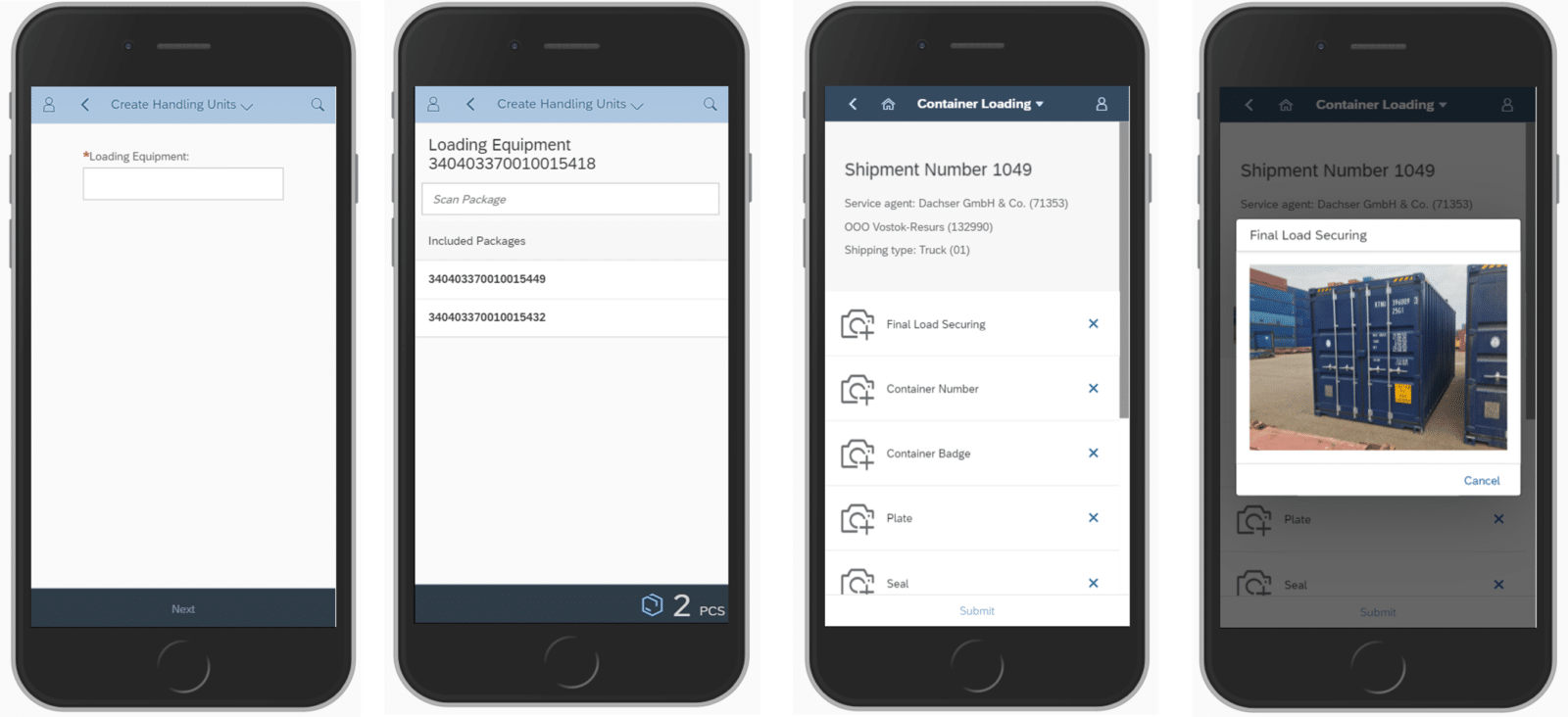
A packing and loading app is a useful tool for businesses that ensures that their goods are shipped efficiently and safely. Here are some features that help our customers:
1. Packing instructions for different types of items:
The app provides instructions on how to pack various items, such as fragile items, liquids, and bulky items. It also suggests the best type of packaging material to use.
2. Handling units optimization:
The app helps optimize the packing process by suggesting the best handling units (pallets, boxes, containers) for the items being shipped. Based on the size and weight of the items, the app provides instructions on how to load the handling units to maximize space and ensure that the weight is evenly distributed.
3. Scanner functionality:
The app can be integrated with a scanner or mobile device to make it easy for workers to input information. Instead of typing instructions, the worker simply scans barcodes, QR codes, or type plates and the information will be posted into the system.
4. Photo documentation:
The app includes a camera function that allows workers to take photos of the items being packed and loaded. This helps protect the organization’s interests by providing proof that the goods were in good condition when they were shipped.
5. Centralized storage:
The photos taken by the app are stored centrally to ensure that they are easily accessible and can be used as evidence if necessary.
By incorporating these features, a packing and loading app helps businesses improve their shipping processes, reduce the risk of damage to goods, and protect their interests in case of disputes.
Complex & Fragile Goods Packing Control Application

Packing Control apps are a game-changer for businesses that deal with complicated, complex and fragile goods. Here’s how our app helps our customers:
1. Simplify the Packing Process:
The app provides step-by-step instructions on how to pack complicated complex and fragile items. This will ensure that even workers with little training can pack items correctly.
2. Ensure Safe Transportation:
By providing detailed packing instructions, the app helps ensure that items are packed properly and securely. This reduces the risk of damage during transportation.
3.Quality Assurance:
The app prompts workers to confirm each step of the packing process. This provides a record of the packing process and assure customers that their items were packed properly.
4. Improved Efficiency:
By streamlining the packing process, the app helps businesses pack items faster and more efficiently. This reduces costs and improves productivity.
Simplifying Type Plate Verification for Equipment and Machinery Application
Type Plate Verification is a process used to verify the accuracy of the information displayed on the type plate of a machine or equipment. This may involve checking the model and serial numbers against records, verifying that the technical specifications are correct, and confirming that the plate has not been tampered with or altered in any way.

Type Plate Verification apps are a valuable tool for businesses that deal with customized goods and equipment, especially in the context of make to order processes.
1. Ensuring Accurate Specifications:
The app enables workers to scan a QR code on the type plate of the machine or equipment to verify that it matches the customer’s specifications. This helps ensure that the right machine is delivered to the customer.
2. Step-by-Step Packing Instructions:
The app provides workers with step-by-step packing instructions for the machine or equipment. This helps ensure that it is packed properly and securely.
3.Smart Overview:
The app provides a smart overview of what has been completed and what still needs to be done, as well as the current status of the packing process. This will help workers stay on track and manage their time more effectively.
4. Time and Process Efficiency:
By streamlining the packing process, the app helps businesses save time and effort, as well as reduce costs and improve productivity.
Overall, a Type Plate Verification app helps businesses that deal with customized goods and equipment to ensure that the right machine is delivered to the customer, pack it properly and securely, and save time and effort in the process.
cbs solutions
Overall, our customer benefit from the Outbound processing apps because they help streamline shipping and logistics processes, reduce costs, and improve accuracy and efficiency. If you would like to learn more about our cbs Outbound processing applications, contact us. Let’s talk about how you can ensure efficient use of resources, reduces costs, and improve overall system performance for your Outbound processing processes.