Optimising Your Inventory Management with Proven SAP Fiori Application Uses Cases

17. May 2023

Most industries such as retail, discrete manufacturing, logistic, F&B and even healthcare must deal with physical products and materials. Common problems such as over/ understocking, inaccurate data and poor forecasting causes problem, especially for operation personnel, finance and even management team.

With cbs Fiori implementation project of three prominent apps, it helps design your inventory management processes much more seamlessly for users.

Post Goods Receipts (Purchase Order & Inbound Delivery)
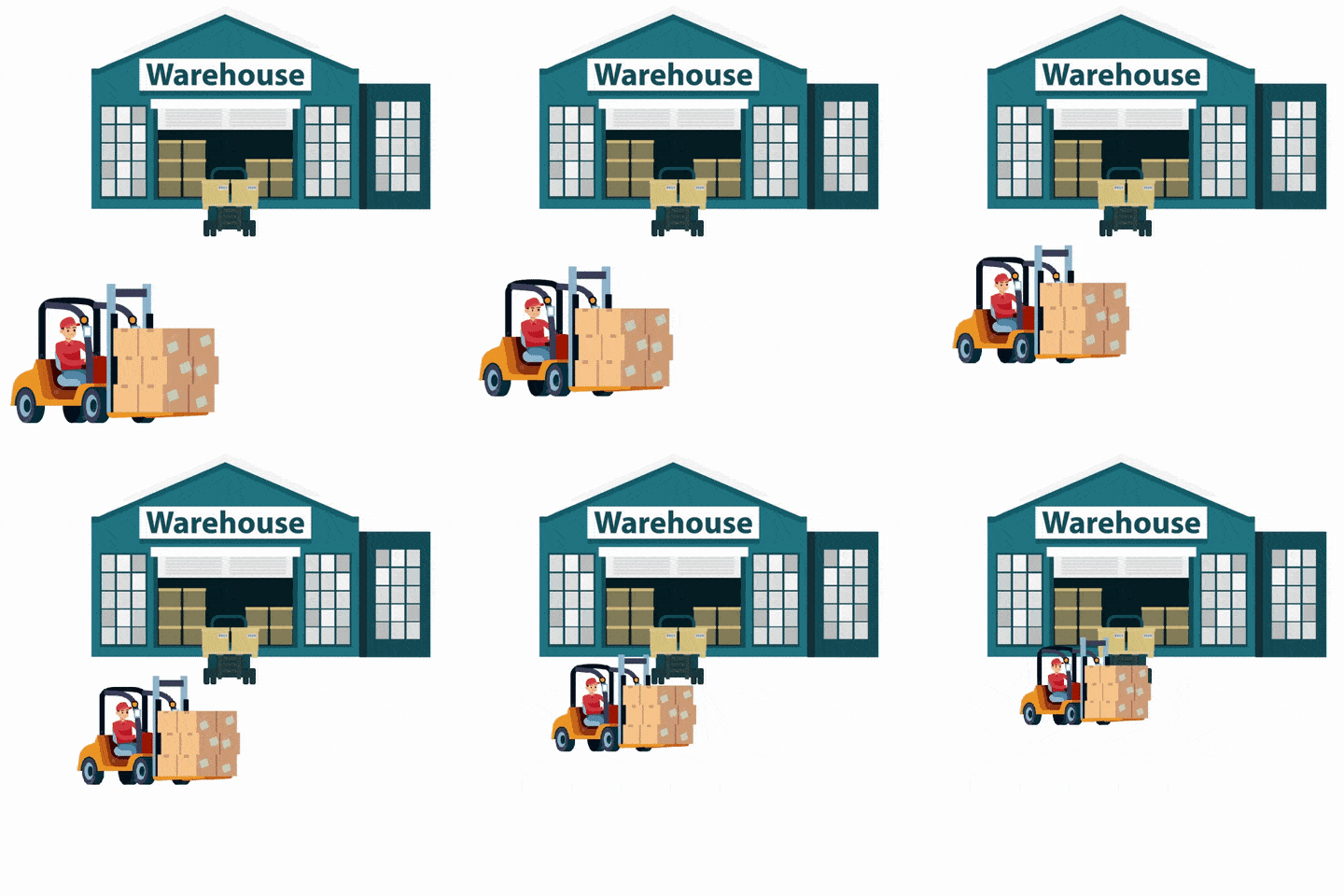
Generally, this app helps record the receipt of goods from a supplier. When goods are delivered to a receiving location, such as a warehouse or production facility, the receiving personnel will verify that the goods received match the details specified in the purchase order and the inbound delivery.
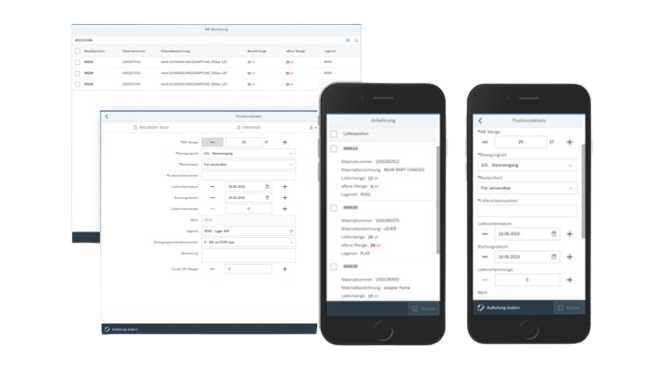
This app is able to post goods receipts based on,

  1. Purchase Orders (Transaction MIGO)
    Good receipts posting for per order/ order item is possible on this app. It also includes data on specification of palletising for WM posting too.
  2. Inbound deliveries (Transaction VL31n)
    For inbound delivery, Goods receipts posting per inbound delivery/ delivery item. There is a QM integration for posting to Q-stock and SU integration for Inbound delivery processes.

Stock Information
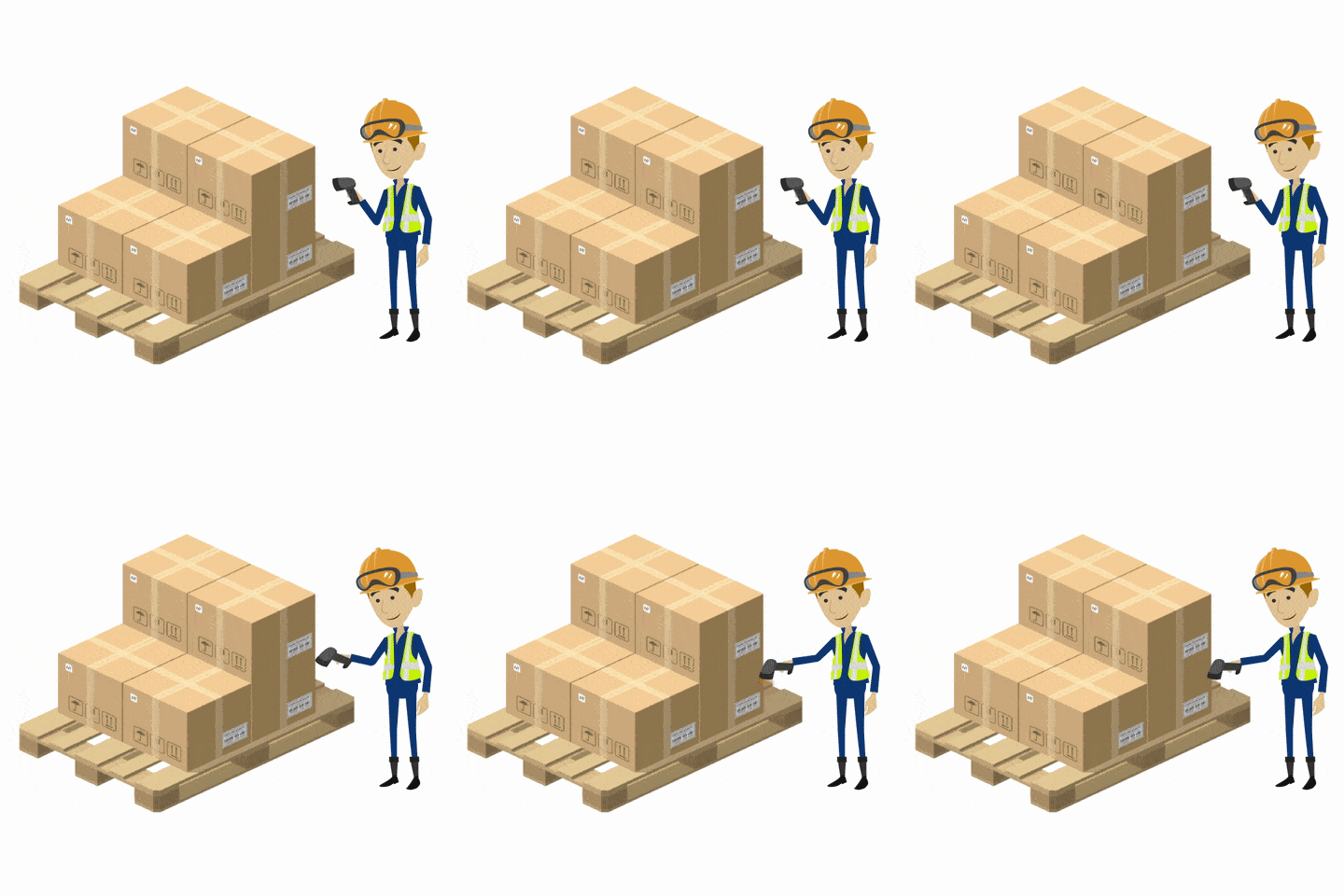
Accurate stock information in a warehouse is critical for inventory management, cost management, customer service, and planning and forecasting. It helps businesses to operate more efficiently, reduce costs, and improve customer satisfaction.
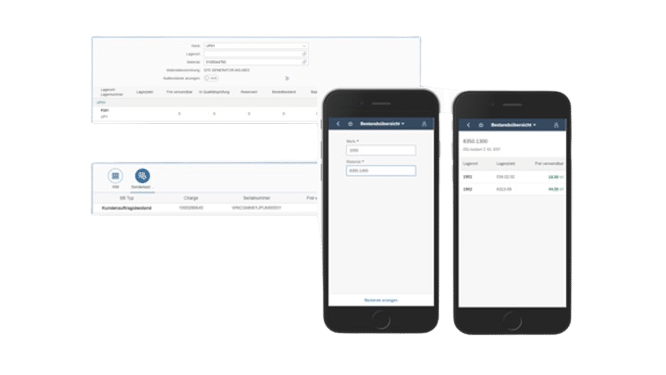
The Stock Information Application is able to display enhanced stock information for materials in plant / storage location. Stock overview MM based on transaction MMBE/MB52

  1. Can jump to WM detail data
  2. Display stock details down to storage bin level

Stock Transfer MM/ Inventory Transfer WM
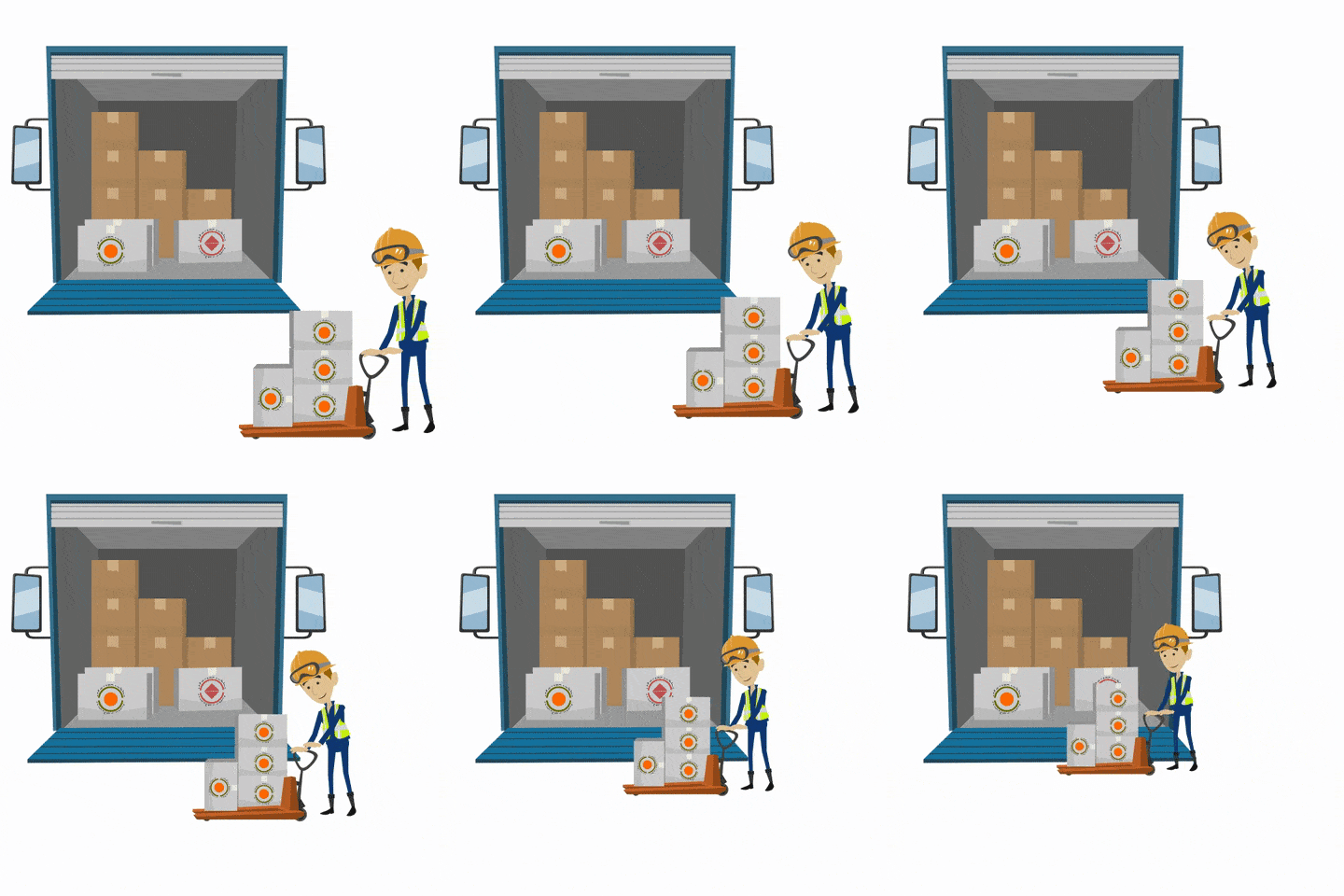
When stock is transferred inside of a warehouse or to production, it is important to track the transfer to ensure that inventory records are accurate. By knowing what has been transferred, warehouse managers can update their inventory records to reflect the new stock levels.

This helps in maintaining inventory accuracy and avoiding stockouts or overstocking. Apart from inventory accuracy, optimising shipping and logistics processes, and complying with regulations is important as part of the process.
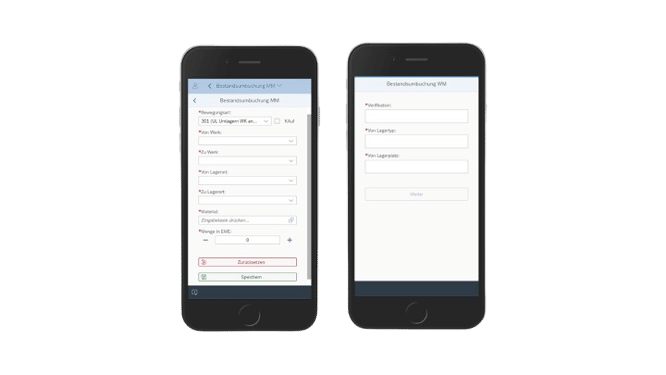
The application that tracks stock transferred out is able to,

  1. Produce a balance sheet transfer from MM of all types (MIGO)
  2. Able to transfer posting of special stocks
  3. Able to sort based on stock categories
  4. Relocation of different stock types within the warehouse
  5. Verification of withdrawal and shipment
  6. Display of multiple quant stock transfers per storage bin

All Three cbs Inventory Management Applications Works with An ERP System Without the Need for Complex Implementation Processes

There is a common consensus that a complex implementation project can lead to too many uncertainty and resources constraints, but with cbs Inventory Management SAP Fiori Applications, it doesn’t have to be the case.

In cbs, these are common use cases for us where we have already implemented with our existing customers and have seen actual results and benefits from our customers. To list a few,

  1. Workers on the ground managing inventory now have a App that they can work directly with, without the need for another resources and effort to post on SAP system.
  2. Additionally, to the above point, there is no need for clumsy and expensive paper work, lowering risk of error.
  3. All posting done on the Apps are done in real time, therefore stock information is always up to date. This will maximise the storage capacity in the warehouse, lowering required cost and expenses.
  4. cbs Fiori Apps does not require any native device to be implemented, which means it can run on any existing modern devices you are currently using (e.g. mobile phone and scanner devices).
  5. Most workers will not be requiring to be SAP trained as a SAP backend user.

With the above benefits, our customers in cbs notice fast return of investment (ROI) with its improved system performance and simplified management and control which helps ensure scalability. By optimising storage utilisation, organisations can be more efficient, productive, and agile in responding to changing business needs.

If you would like to learn more about our cbs Inventory Management Applications, speak with us today and our consultant can do a short demonstration to show how you can ensure efficient use of resources, reduces costs, and improves overall system performance for your inventory management processes.
Related articles
oneascent-m&a-image-4
Insight
A Safer Way to Manage ERP Change During M&A
Read More
14. March 2026
oneascent-m&a-image-3
Insight
Why ERP Systems Make Divestitures and Carve-Outs So Difficult
Read More
14. March 2026
When a merger, acquisition, or divestiture is announced, the spotlight is usually on the strategic story. Market expansion. Portfolio optimisation. Synergies. Shareholder value. Behind closed doors, deal teams are working intensely on valuation models, legal structures, and regulatory approvals. Leadership teams focus on how the new organisation will operate once the transaction is complete. Technology rarely sits at the centre of these discussions. And yet, once the deal is signed, it often becomes the hardest problem to solve. Where the real complexity begins In large enterprises, ERP systems sit at the centre of how the organisation actually runs. Finance reporting, procurement, supply chain operations, manufacturing processes, and compliance controls are all deeply connected through the same digital core. Over time, these systems evolve into highly integrated environments. Multiple legal entities may share the same ERP instance. Business units that look independent on an organisational chart may rely on shared data structures, reporting frameworks, and operational processes inside the same system landscape. This works well when the organisation remains intact. It becomes far more complicated when the structure of the business changes. When a company sells a division, spins off a business unit, or acquires another organisation, those shared systems suddenly need to be separated, replicated, or reorganised. Data structures that support several entities may need to be redesigned. Reporting environments must remain stable even as the underlying systems change. And this often needs to happen under strict deal timelines. Why ERP challenges appear late One reason ERP complexity catches organisations by surprise is timing. In many transactions, technology teams are brought into the conversation only after the deal structure is already defined. By that point, legal agreements are signed, Day-One deadlines are set, and the operational expectations of the new organisation are already clear. What becomes visible at that stage is the gap between the business structure of the deal and the technical reality of the systems that support it. Separating a business entity on paper may take weeks. Separating it inside an ERP system can take months if the dependencies are not fully understood. When technology risk becomes business risk This is where technology stops being a purely IT concern. If ERP systems cannot be separated cleanly, finance reporting may be affected. Regulatory obligations may become harder to fulfil. Supply chains and operational processes may experience disruption. Integration timelines can extend far beyond what deal teams originally expected. In other words, ERP complexity can quickly become a business continuity risk. This does not mean that mergers, acquisitions, and divestitures are inherently problematic from a systems perspective. Organisations execute these changes successfully every year. But the most successful programmes share a common mindset. They recognise early that enterprise systems are not just operational tools. They are structural components of the business itself. Treating ERP as part of the deal strategy When ERP landscapes and enterprise data structures are considered earlier in the transaction process, organisations gain much greater control over execution. Dependencies between business entities become visible sooner. Separation or integration scenarios can be evaluated earlier. Technology teams can design approaches that protect operational continuity while still supporting the strategic intent of the deal. This shift in thinking is becoming increasingly important. Modern ERP environments support far more than financial accounting. They underpin operational processes, regulatory reporting, supply chain coordination, and increasingly the data foundations that support analytics and AI. Changing the structure of the business inevitably means changing the structure of the systems that run it. For organisations navigating mergers, acquisitions, or divestitures, the real question is no longer just how to close the deal. It is how to execute the change without destabilising the systems that keep the business running. Over the coming weeks, the ONE.Ascent campaign will explore how enterprises approach ERP change during structural events such as mergers, acquisitions, and divestitures, and what separates high-risk programmes from those executed with confidence. Continue the Conversation If your organisation is navigating a merger, acquisition, carve-out, or divestiture, join our upcoming ONE.Ascent executive webinar where we explore the practical realities of managing ERP change during structural transformation. Register for the session or explore the ONE.Ascent campaign hub to see how enterprises across the Asia Pacific are approaching modernisation with greater clarity and control.
Insight
The Hidden ERP Risk in M&A: Why Technology Becomes the Hardest Part After the Deal
Read More
14. March 2026