
The possibilities of AI in Finance are vast. Yet that is precisely what makes getting started difficult: Where do you begin when so much is theoretically possible? Reporting, Forecasting, Controls, Working Capital or Reconciliation: There are opportunities for artificial intelligence in almost every area of Finance. For management, however, what is technologically possible matters less. The more important question is: Where can AI create tangible value under today’s conditions?
Why Getting Started with AI in Finance is so Difficult
At first glance, the finance function seems like an ideal place for AI: large volumes of data, many recurring processes and a strong need for reliable analysis. Yet companies start from very different positions. Processes vary in their level of harmonization, data is not equally available everywhere, and technological conditions differ significantly. Nevertheless, waiting for perfect conditions is not necessary, because AI maturity is built primarily through practical application.
From the Problem to the Right Use Case
Rather than asking about the latest technology first, it is worth looking at the specific challenges in Finance. Where does manual analysis consume particularly substantial resources? Where is information missing for fast decisions? Where do controls and reconciliations create recurring effort? And where could better forecasts make an immediate difference? These questions reveal different starting points, five of which have proven particularly promising in practice.
AI-Driven Finance and Group Reporting
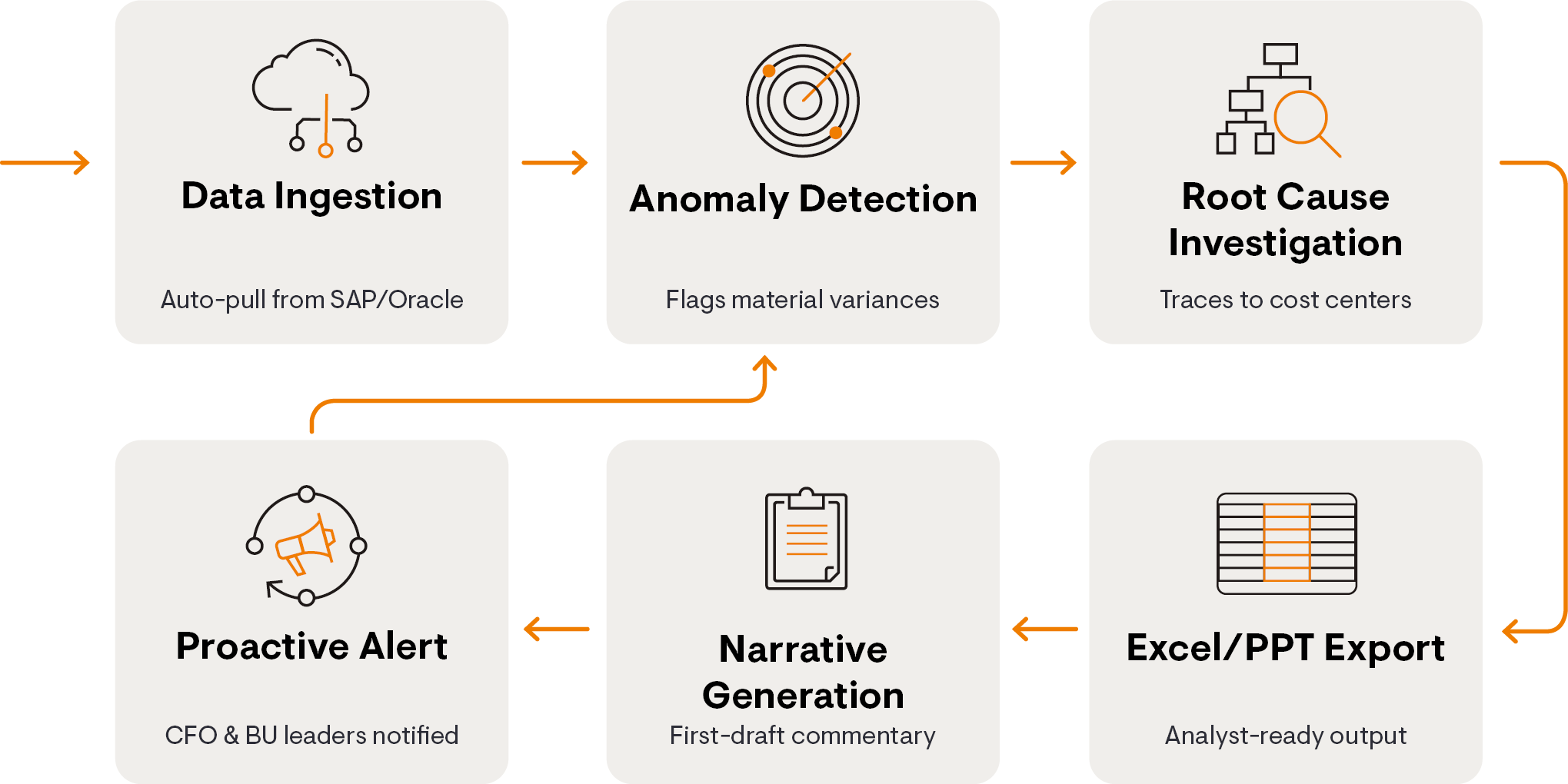
Reporting is rarely just about the numbers, but above all about explaining them. AI-driven Finance and Group Reporting insights can help identify material deviations and likely drivers more quickly. Data is ingested automatically, material variances are flagged, root causes are traced down to cost center level and first-draft commentary is prepared. This leaves more time for the actual assessment and the discussion with management.
AI-Powered Cash Flow Forecasting
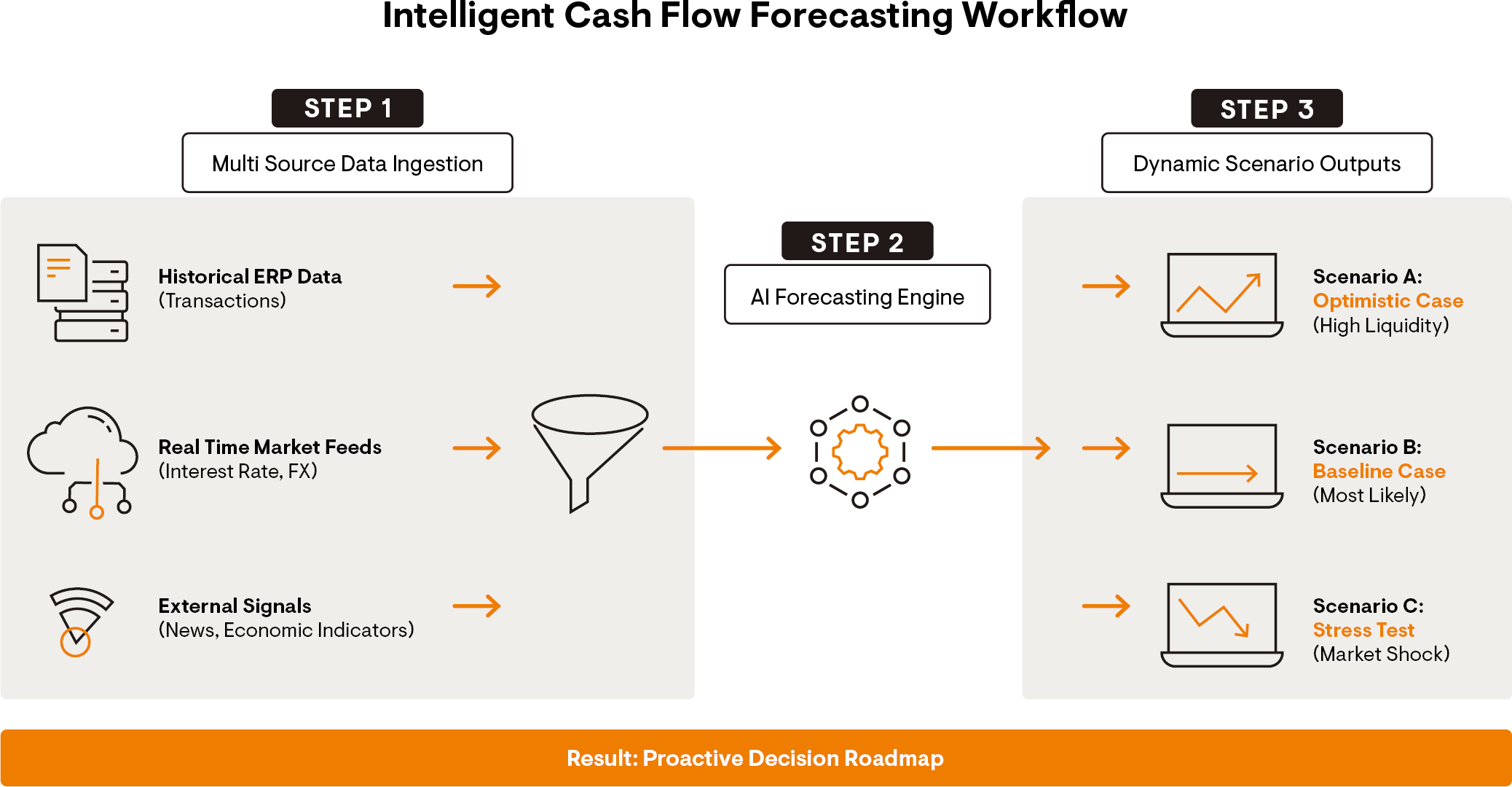
Liquidity planning is often based on manually maintained assumptions and only updated in fixed cycles. In AI-powered Cash Flow Forecasting, historical and current information can be used to generate more dynamic scenarios. ERP data, market data and external signals are combined into different scenarios, from an optimistic case to a stress test. This creates a better basis for forward-looking decisions.
Anomaly Detection, Working Capital and Reconciliation
In control processes, it is hardly possible to review every transaction individually. AI-based anomaly detection can prioritize unusual transactions so that reviewers can focus on the relevant cases. With AI-driven Net Working Capital optimization, AI can help reveal the operational drivers behind changes in receivables, payables and inventory. And in intelligent Intercompany and GR/IR Reconciliation, discrepancies can be grouped and likely root causes suggested for further processing.
These five application areas are explored in more detail in the cbs whitepaper “5 AI and Agentic Value Cases for Fast Value in Finance”.
One Size Fits All? Not in Finance
The most interesting use case is not automatically the best starting point. Two dimensions are particularly relevant: process harmonization and technological readiness. How standardized and scalable are the Finance processes? And how accessible and usable are the relevant data sources, platforms and analytical capabilities already? Different starting conditions lead to different appropriate entry points.
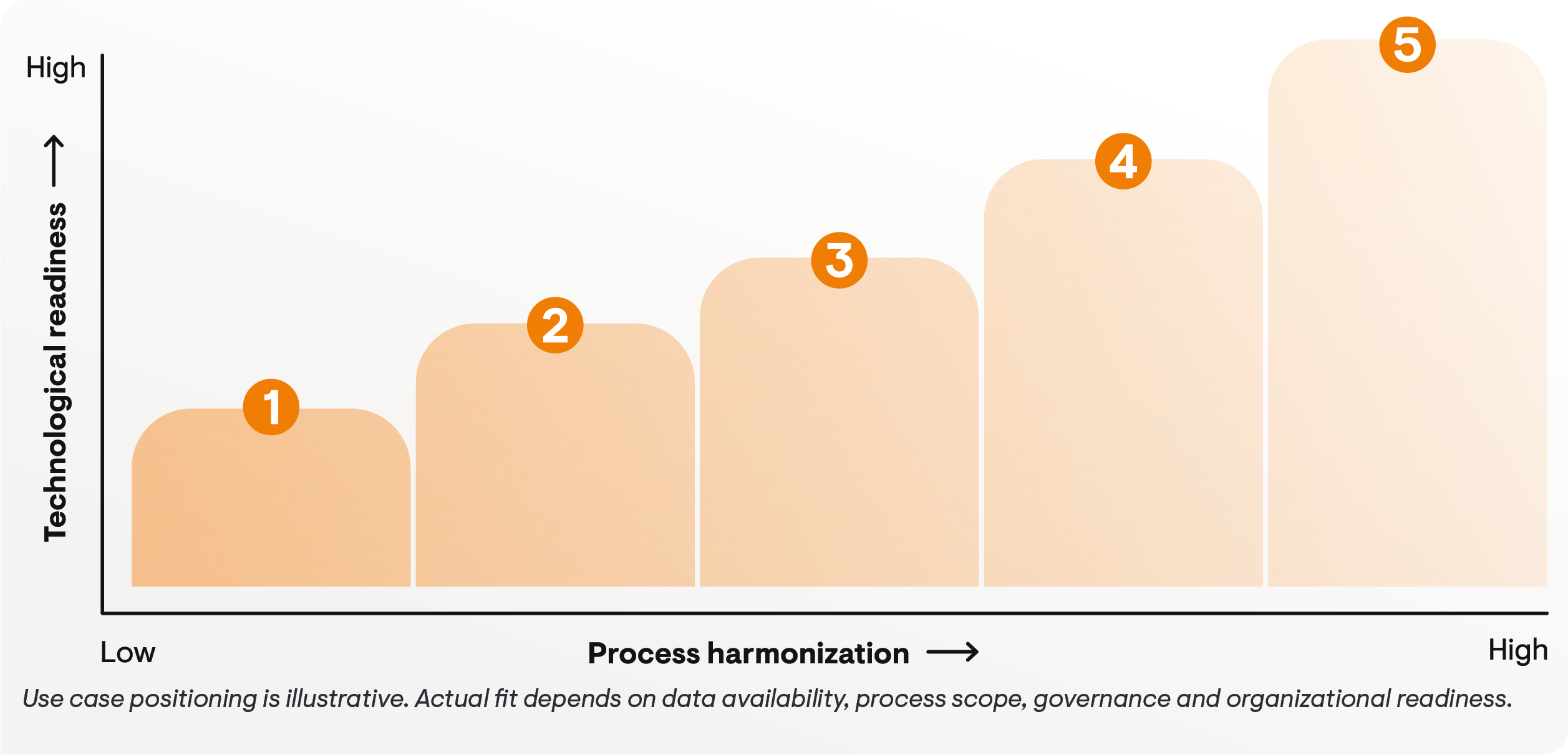
This changes the central management question. Not: “What is the most advanced AI use case?” But: “Which use case fits our current maturity level while also taking us a meaningful step forward?”
The Right Starting Point: Start Small, Learn Fast
The right starting point combines business relevance, realistic feasibility and learning potential. A focused MVP can not only deliver initial results but also provide valuable experience for the broader AI journey: What data quality is actually required, how do business teams respond to AI-generated suggestions, and how can the approach be transferred to other areas?
How cbs Supports Your AI Journey in Finance
As an implementation partner, this is precisely where cbs comes in. Together with you, we assess the starting conditions and maturity level, prioritize the relevant use cases, develop realistic MVPs and subsequently scale successful approaches across the entire finance organization.
Find out more about specific use cases and possible entry points in our whitepaper.


