Production plans can often be created quickly on paper – and even faster with AI. In reality, however, they encounter limited tank capacities, fluctuating demand, cleaning cycles, product changeovers, and the need for close coordination between production, logistics, and supply chain teams.
In the chemical and consumer goods industries in particular, the feasibility of a plan is therefore not determined solely by available plant capacity. The tank infrastructure often becomes the decisive factor for scheduling, sequencing, and inventory development.
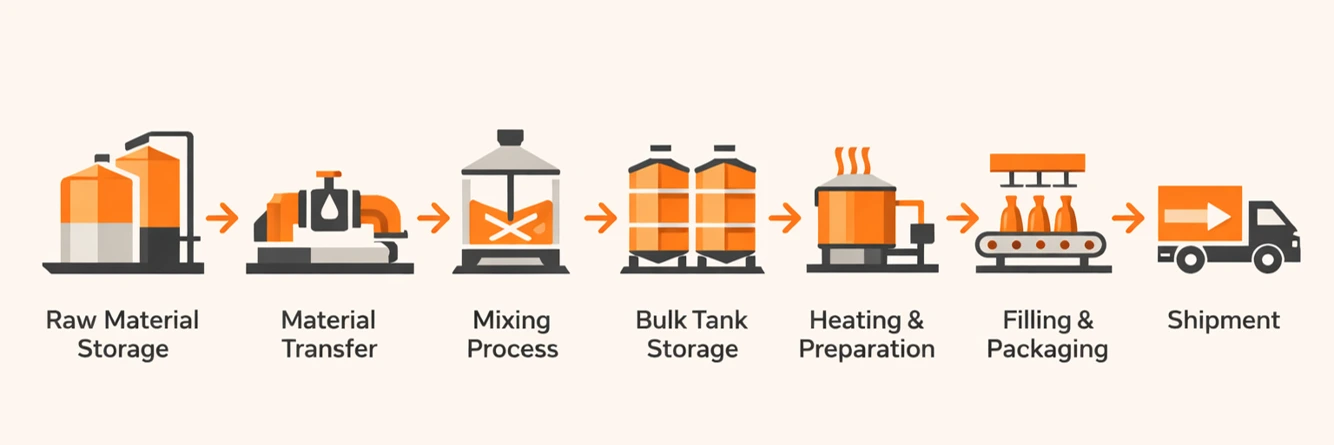
For production planners and those responsible for SAP PP/DS or ePP/DS, this means that tank capacities, cleaning cycles, and other operational constraints must be taken into account early enough to create an executable plan and retain robust courses of action when short-term changes occur.
Tank planning affects far more than production
In process industries, tanks perform several functions at once: they hold raw materials, intermediates, or finished goods, connect production stages, and buffer fluctuating material flows. As a result, they directly influence when production, stock transfers, or handovers to the next process step can take place.
Even individual planning decisions can affect several areas:
- Delivery dates come under pressure.
- Inventory levels increase unnecessarily.
- Additional stock transfers become necessary.
- Plants do not operate within their optimal utilization window.
- Short-term replanning increases.
Tank planning therefore influences decisions far beyond the shop floor. Insufficient capacity or conflicts identified too late affect service levels, working capital, and supply chain stability.
Why conventional planning approaches reach their limits
Production data alone is not sufficient for sound decisions. Planners also need transparency into existing tank constraints, interdependencies between process steps, and the effects of a change on inventory, deadlines, and downstream processes.
In established system landscapes, relevant information is often distributed across different applications and areas of responsibility. As a result, planning, manufacturing, and adjacent functions recognize too late the impact that a changed sequence, an additional cleaning cycle, or limited tank capacity will have on the overall plan.
Production managers therefore face the following question:
From isolated planning steps to integrated processes
Reliable tank planning therefore requires production planning, manufacturing execution, and adjacent supply chain processes to use the same constraints and material movements. This end-to-end integration makes it clear whether a plan is executable under actual production conditions.
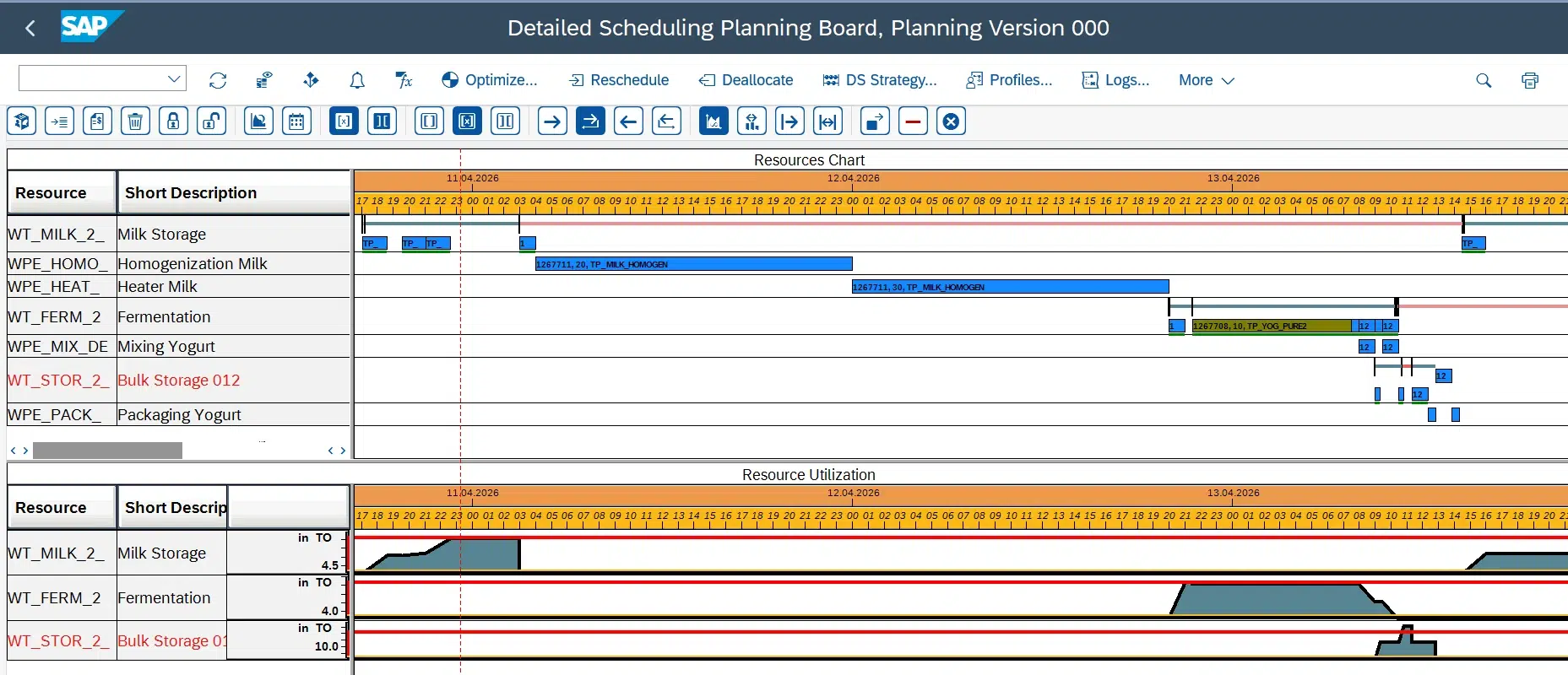
The benefit lies in a shared understanding of the constraints and their effects without introducing additional planning layers.
For example, planners can identify more quickly
- when tank capacities become a bottleneck,
- which alternatives are available when conflicts arise,
- how replanning affects downstream processes,
- how inventory levels and delivery dates develop.
Connecting planning, manufacturing execution, and operational control is therefore a central component of modern manufacturing architectures: constraints become visible where planning decisions are made, and their effects can be traced through to execution.
Conclusion
Production planning in the process industry is often determined by constraints that lie beyond the actual plant capacity. Tank capacities, sequences, handling processes, and material flows have a significant influence on the quality of planning decisions.
Those who take tank capacities, sequences, handling processes, and material flows into account at an early stage can identify conflicting objectives sooner and evaluate alternatives before short-term replanning becomes necessary. This increases planning stability and creates a more reliable basis for decisions across the supply chain.
White Paper: Considering Tank Planning and Production Planning Together
Would you like to explore the topic in greater depth?
The white paper presents typical production planning and tank planning scenarios in the chemical and consumer goods industries. It explains how tank constraints can be made visible at an early stage, conflicts